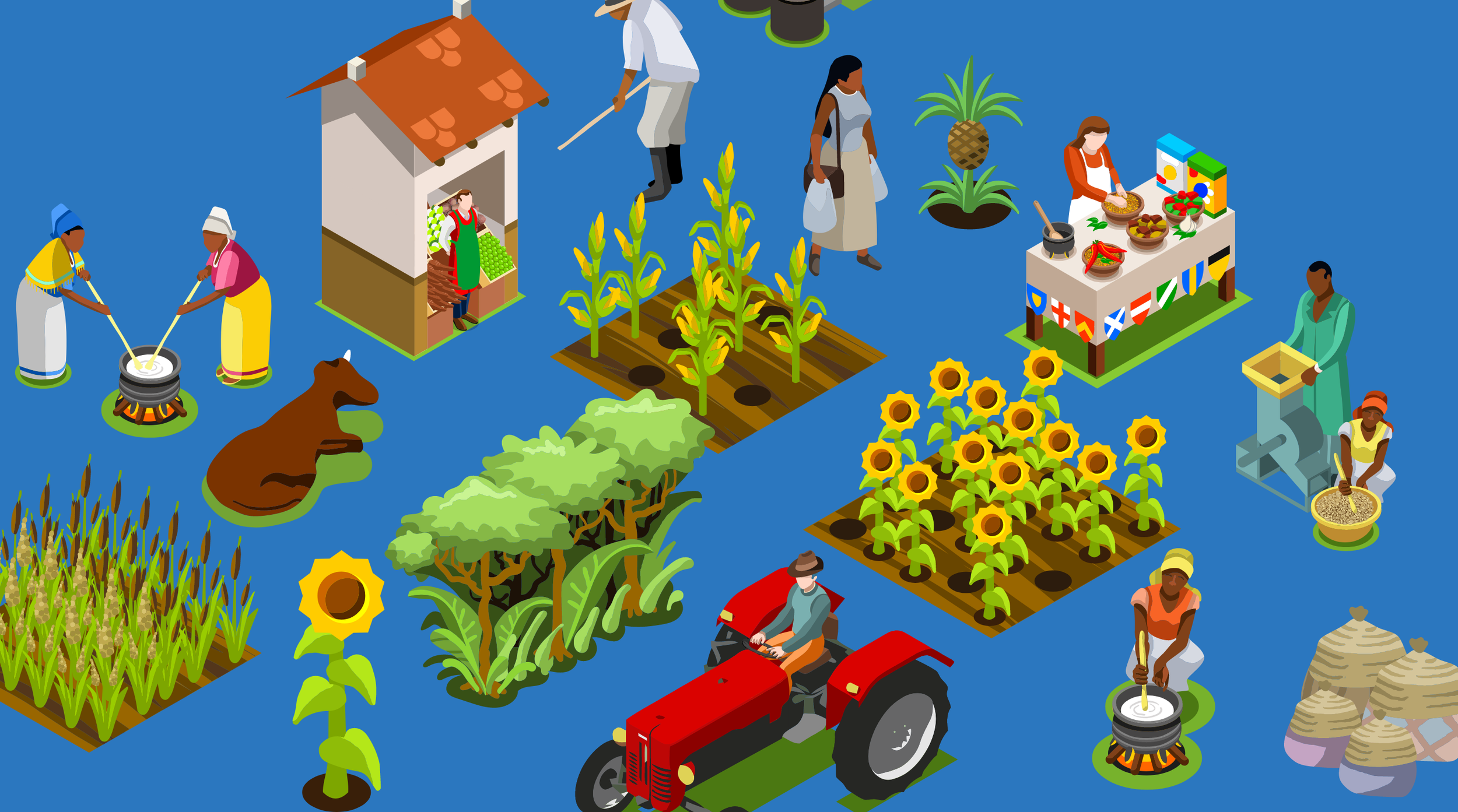
Interactive data visualization for global food systems
Change the Game, Change the Future is an interactive decision-making platform developed by the Food and Agriculture Organization of the United Nations (FAO) in partnership with The Lexicon. Designed to make complex agricultural policy more accessible, the experience helps policymakers, educators, and the public explore how policy decisions influence food security, economic development, and environmental sustainability.
Using data from more than 190 countries, the platform models the interconnected impacts of food loss and food waste interventions across 17 global regions. Rather than presenting static information, the experience allows users to experiment with policy choices, visualize trade-offs, and understand how local decisions contribute to global outcomes through the use of storytelling and gamification.


Contributions
I led the UX design and developed the interactive prototype, translating complex policy research into an intuitive experience that encourages exploration and systems thinking.
My work focused on simplifying dense policy information, designing clear interaction patterns for exploring interconnected datasets, and creating visualizations that helped users understand cause-and-effect relationships across environmental, economic, and social systems.
By combining data visualization, interaction design, and storytelling, the experience encourages users to think beyond individual metrics and recognize the interconnected nature of global food systems. The result is an educational tool that makes sophisticated policy models understandable.
Prototyping
Data visualization
Interaction design
Visual design
Wireframing
Setting The Stage
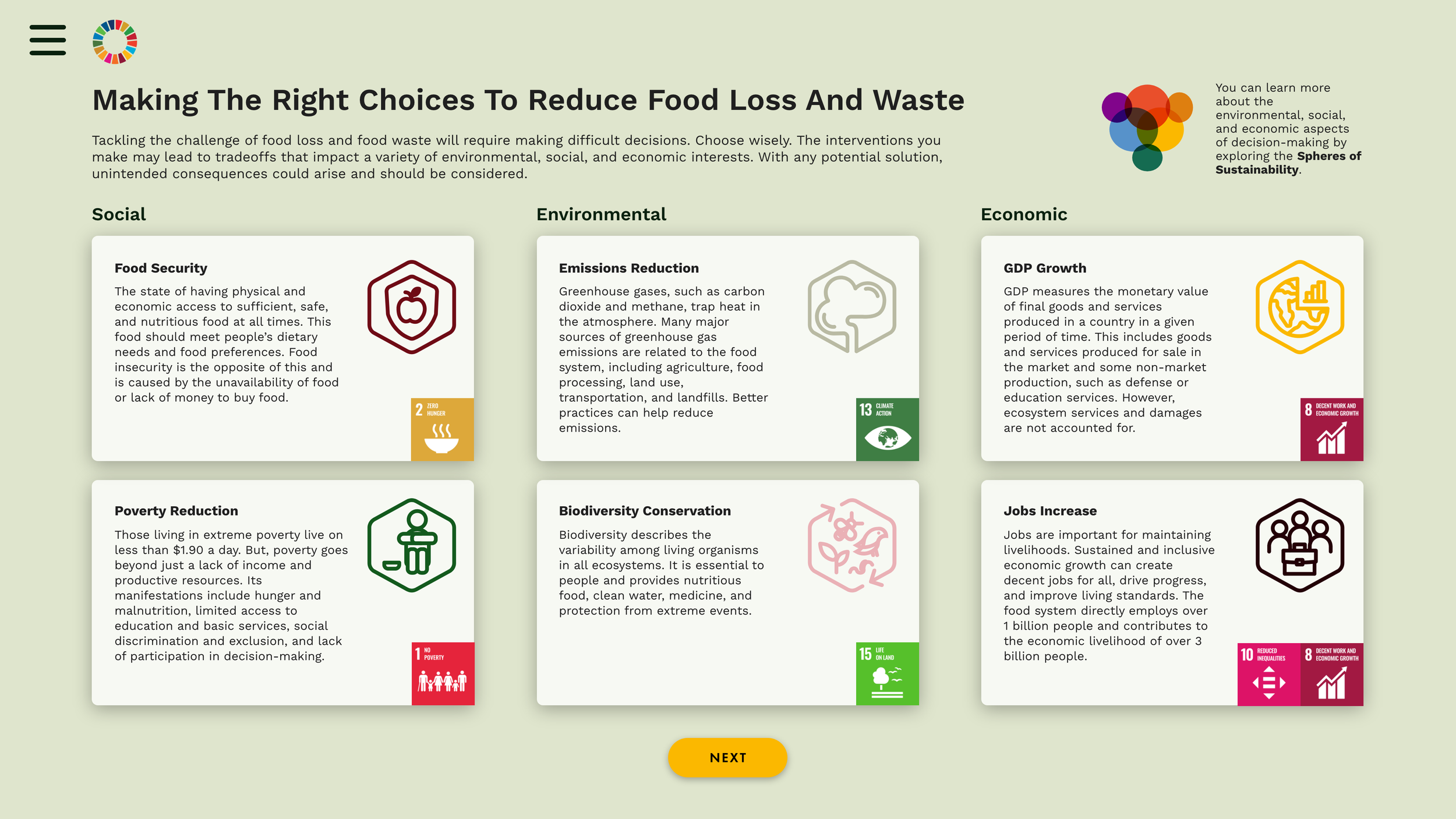
Users begin by learning about the global challenges surrounding food loss and food waste, along with the United Nations Sustainable Development Goals and the Lexicon’s Spheres of Sustainability framework that underpin the simulation. This establishes the environmental and policy context before introducing decision-making.
Regional Context
Players then select one of 17 global regions, each representing a unique combination of agricultural, economic, environmental, and social conditions. Regional profiles communicate key strengths and challenges using visualizations that help users understand the context in which policy decisions are made.
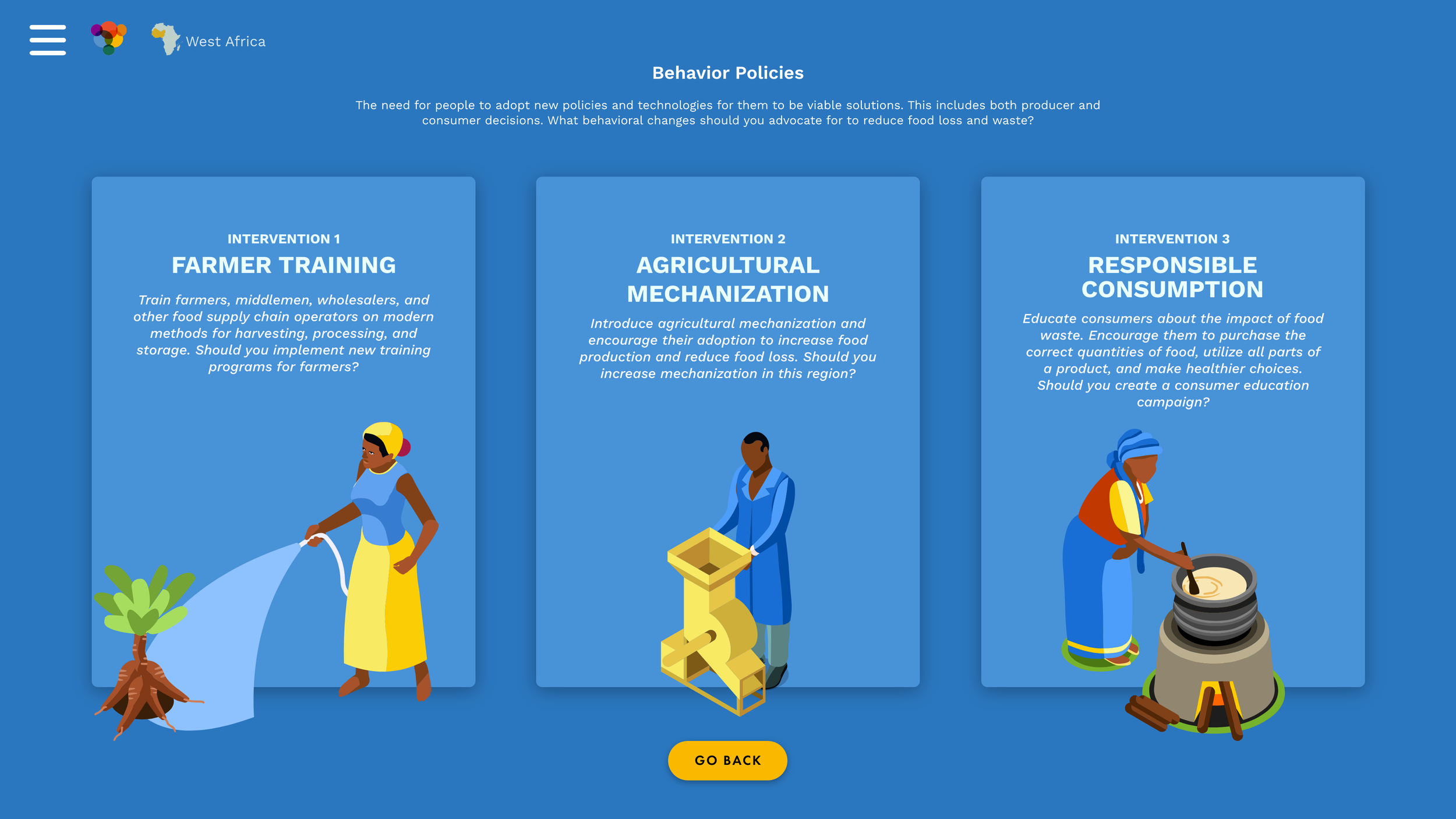
Considering Interventions
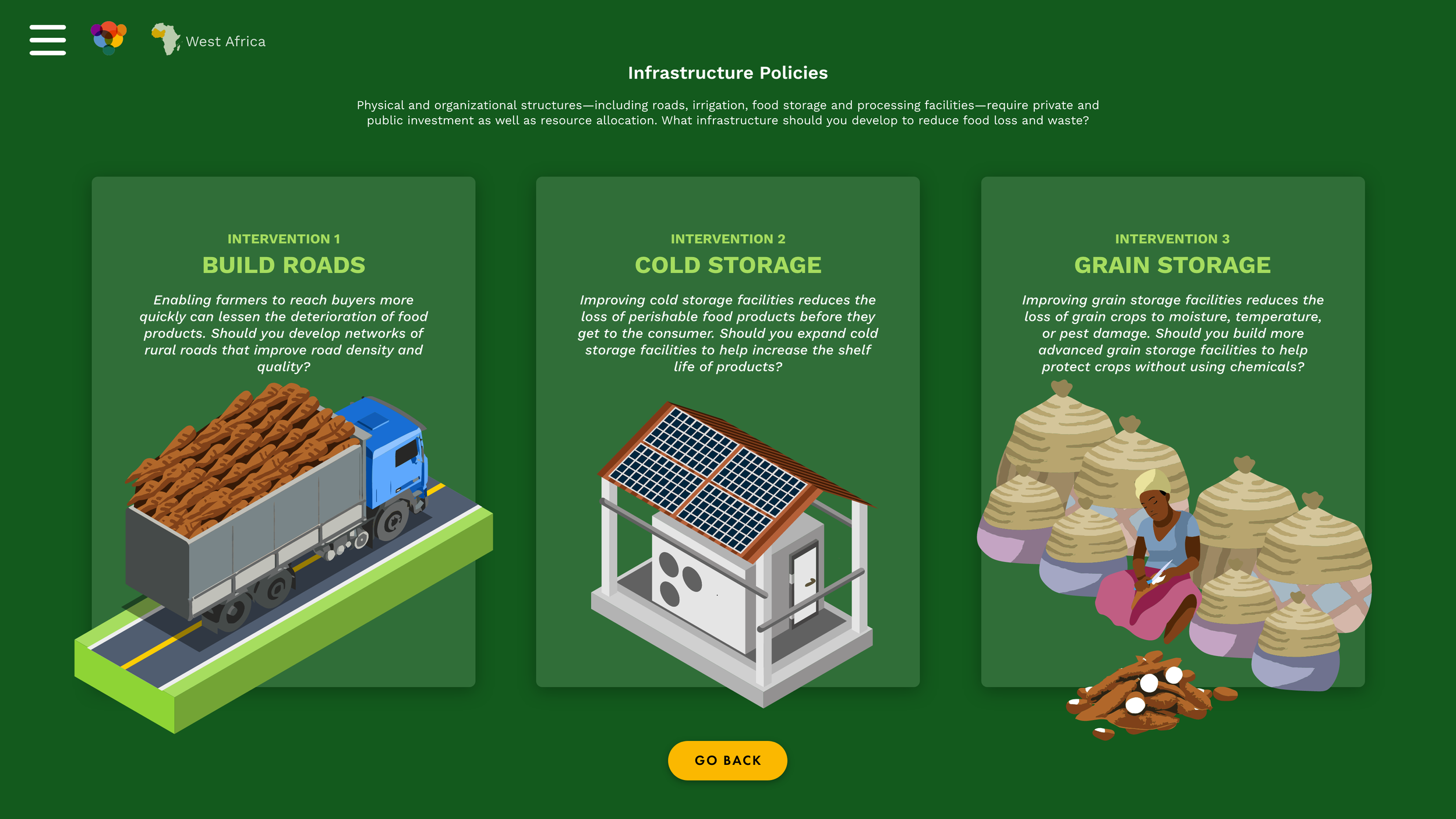
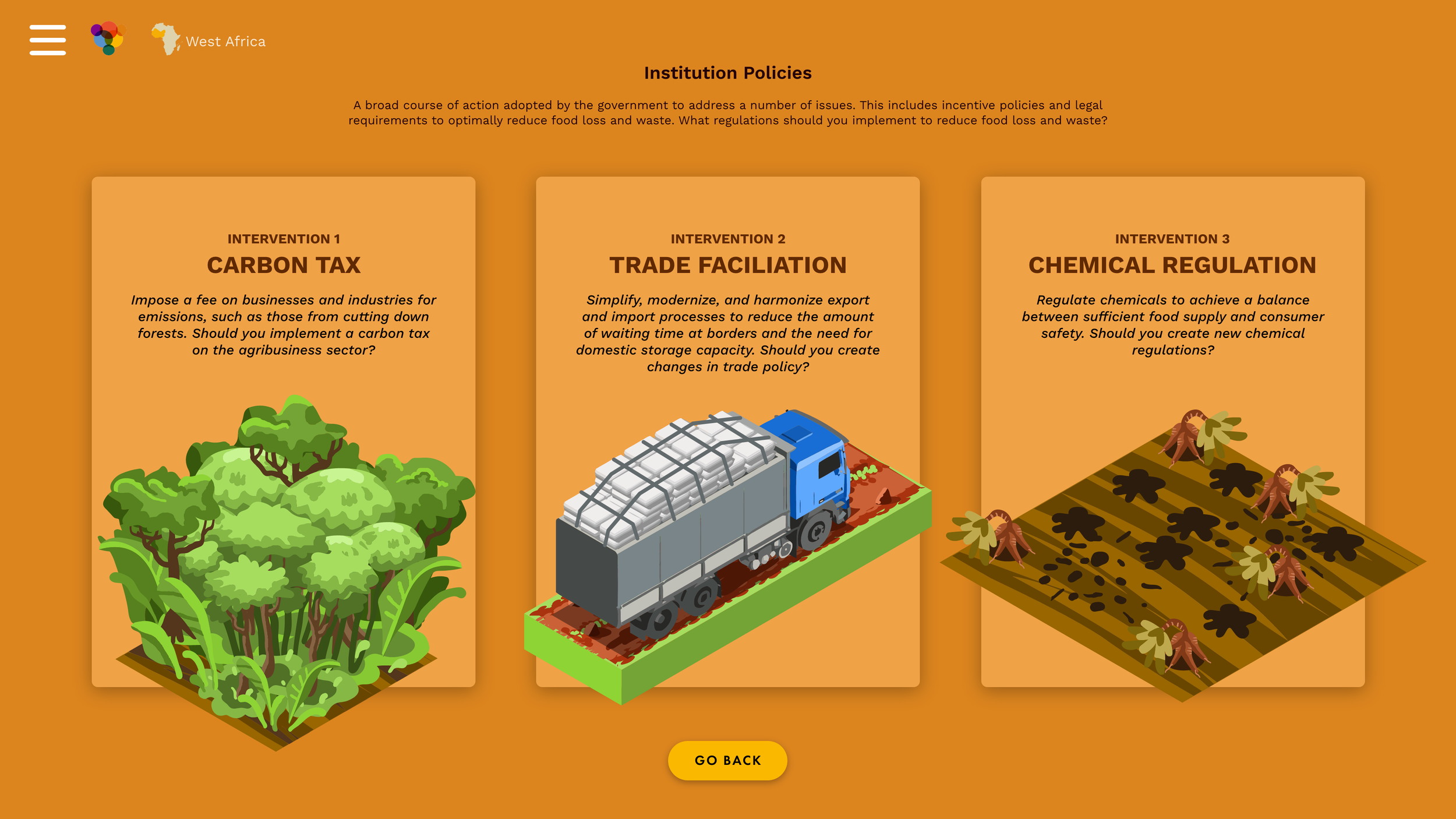
Next, users review a collection of institutional, infrastructure, and behavioral interventions designed to reduce food loss and waste. Each intervention includes supporting information about its potential impacts, allowing players to compare strategies before investing limited resources.
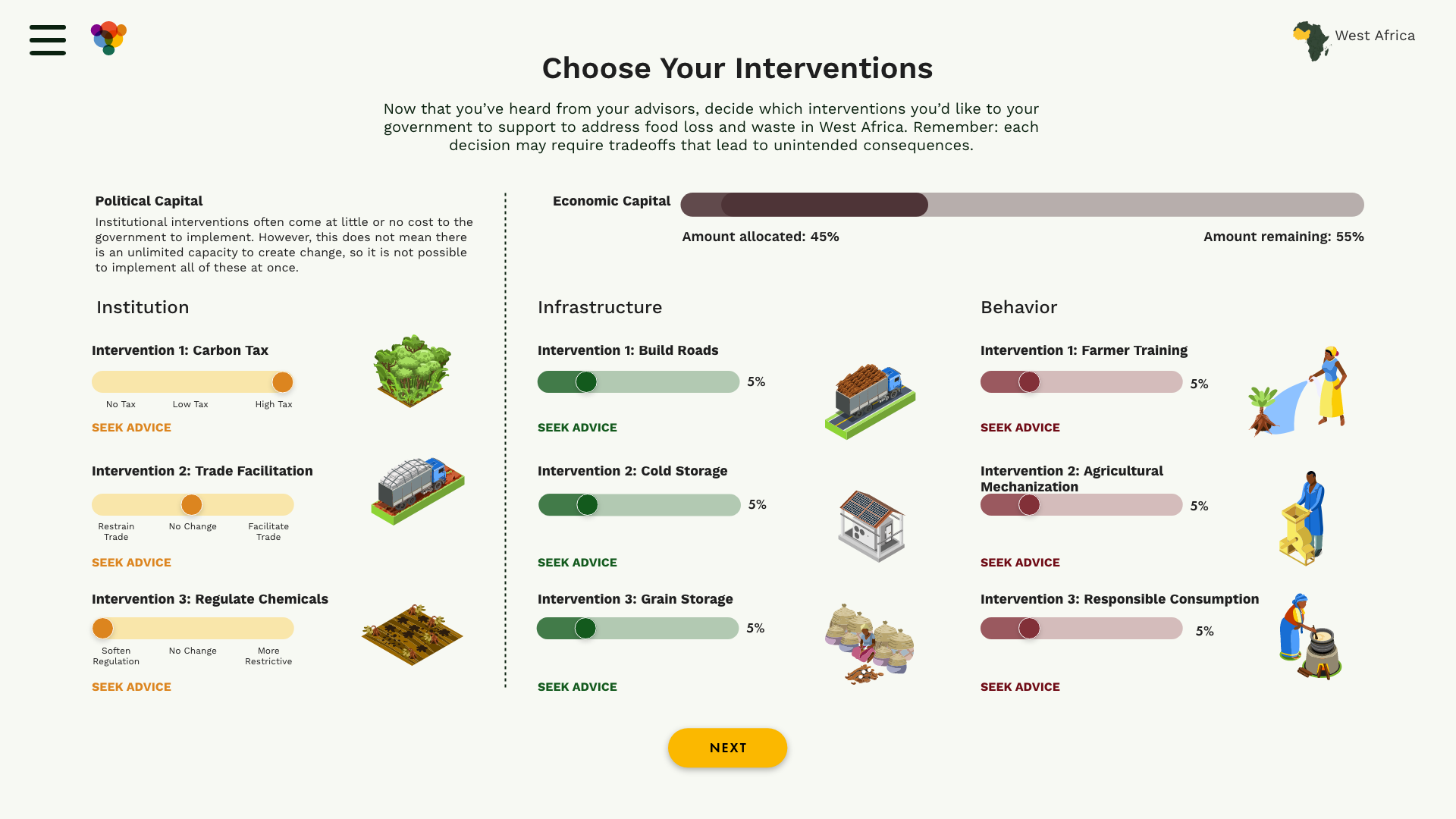
Allocating Resources
To simulate real-world policymaking, players allocate funding across competing interventions while balancing environmental, economic, and social priorities. They can also consult recommendations from stakeholders and subject matter experts, introducing multiple perspectives into the decision-making process.
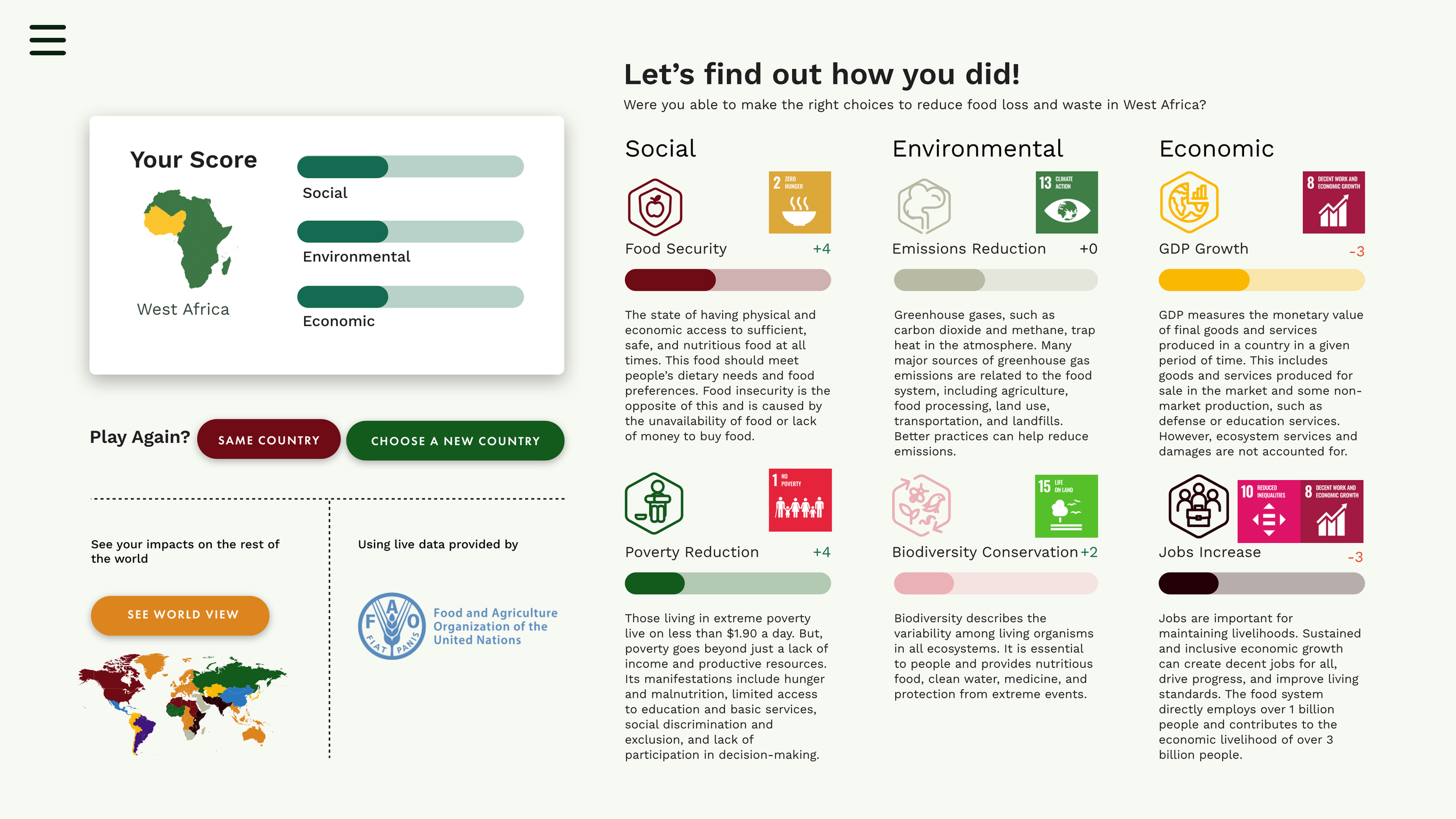
Visualizing Outcomes
After submitting their strategy, users receive a personalized scorecard visualizing the projected outcomes of their decisions. Rather than presenting a simple success or failure, the results communicate both positive impacts and unintended trade-offs across interconnected sustainability metrics.
Douglas Gayeton
The Lexicon of Sustainability Founder
Katelyn Mann
Project Manager
Core team
This project was created through contributors of the Green Brown Blue accelerator program that mobilizes experts and builds tools to tackle challenges facing food systems